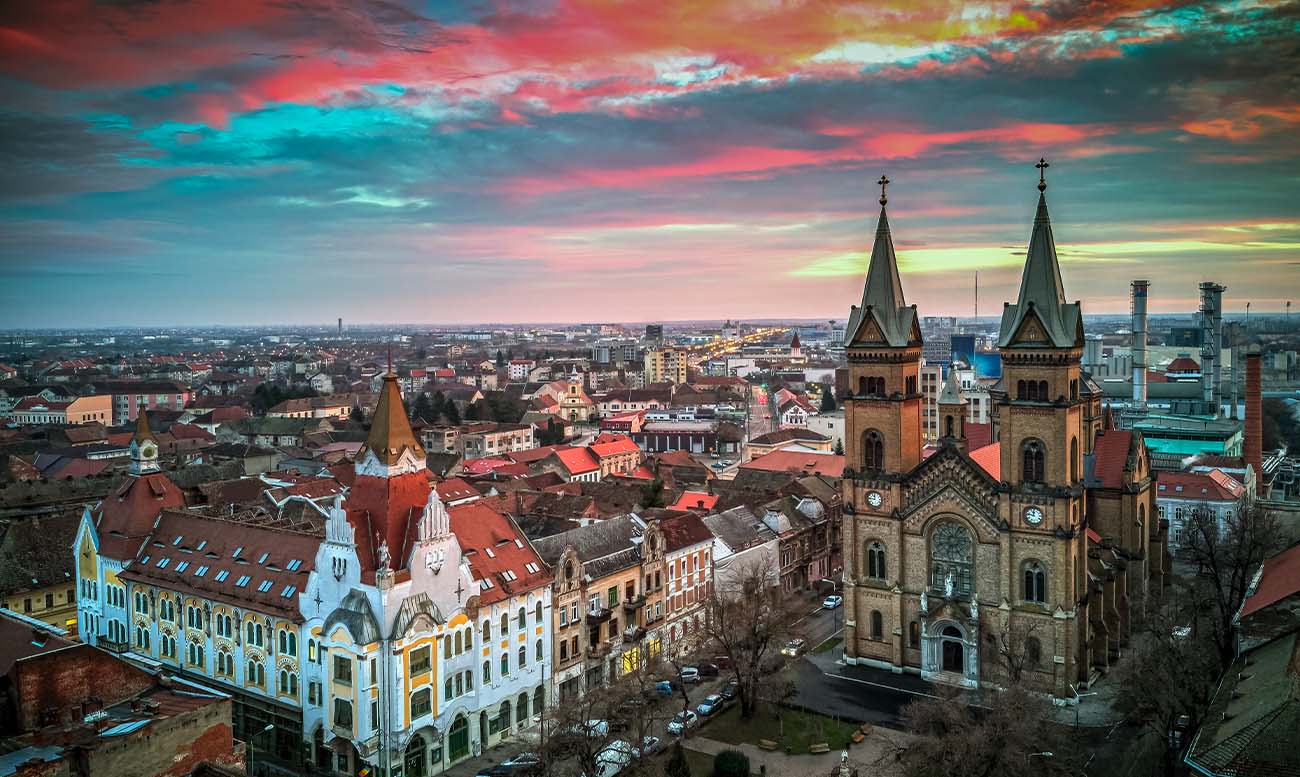
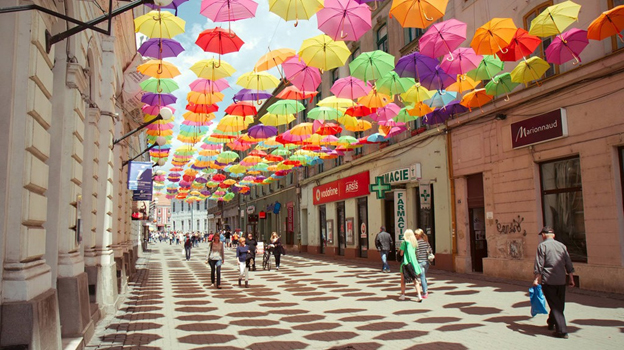
The first city to be free from communism, Timişoara is one of the most developed economic areas in Romania.
Timişoara, one of the largest cities in the country, became known all over the world as the place that triggered the Romanian Revolution in December 1989. The bloody clashes made Timişoara the first Romanian city free of communism.
Timişoara was also the first city to introduce electric street lighting and electric trams, the first city to have a paved road and the first to organize a cinema projection.
The origin of the fortress goes back to the 13th century when Timiş county, whose centre was at Timişoara, was included in the Hungarian kingdom. Under Ottoman domination for 200 years and then under Austrian-Hungarian rule for another two centuries, Timişoara is one of the most intensely multicultural cities in Romania, with significant Hungarian, German and Serbian minorities.
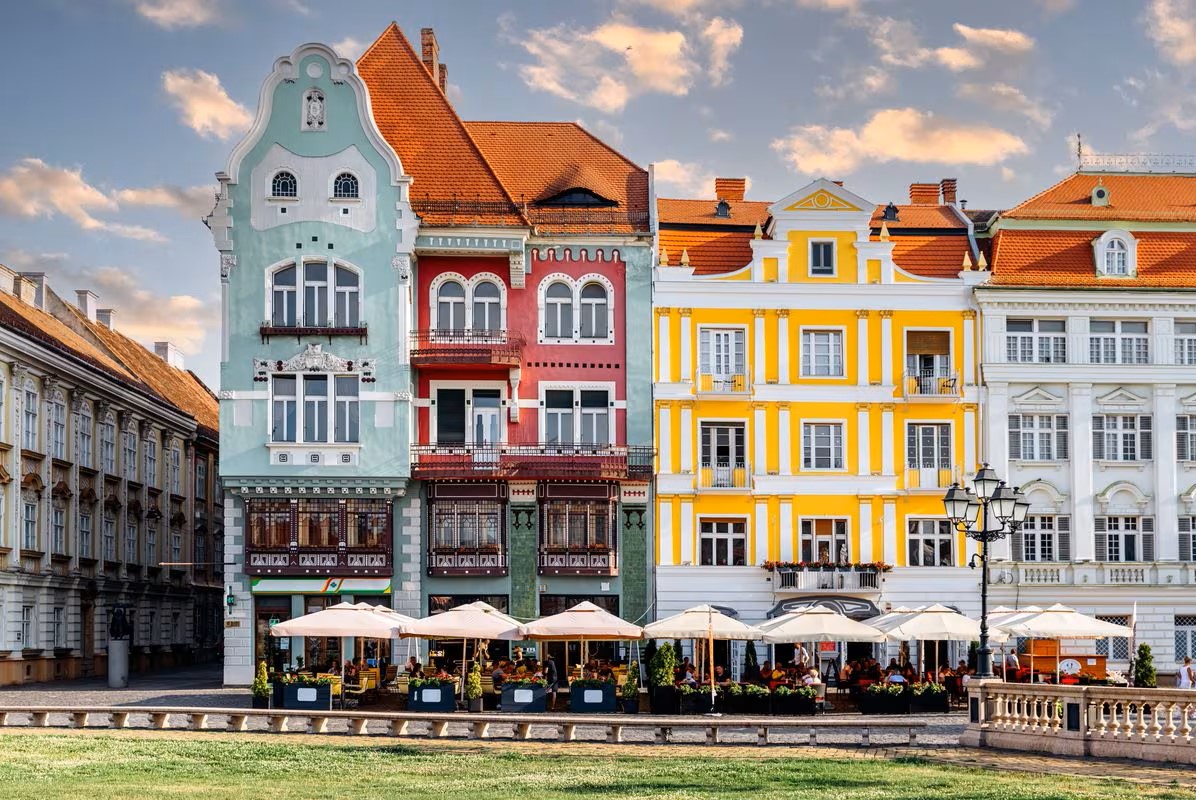
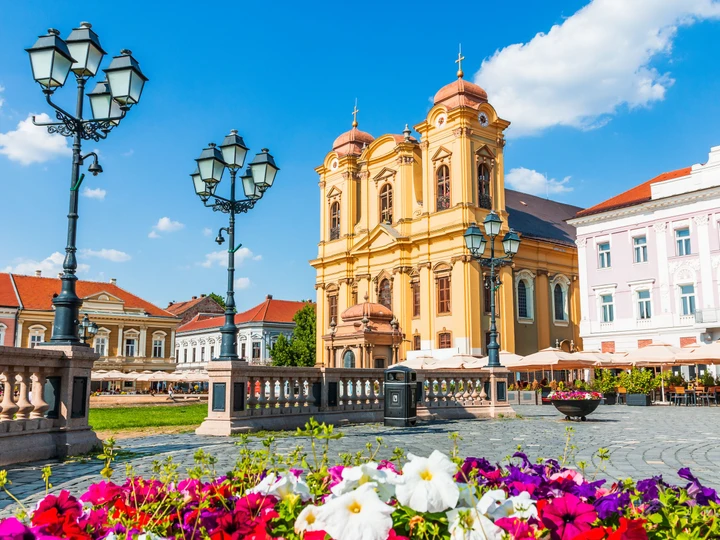
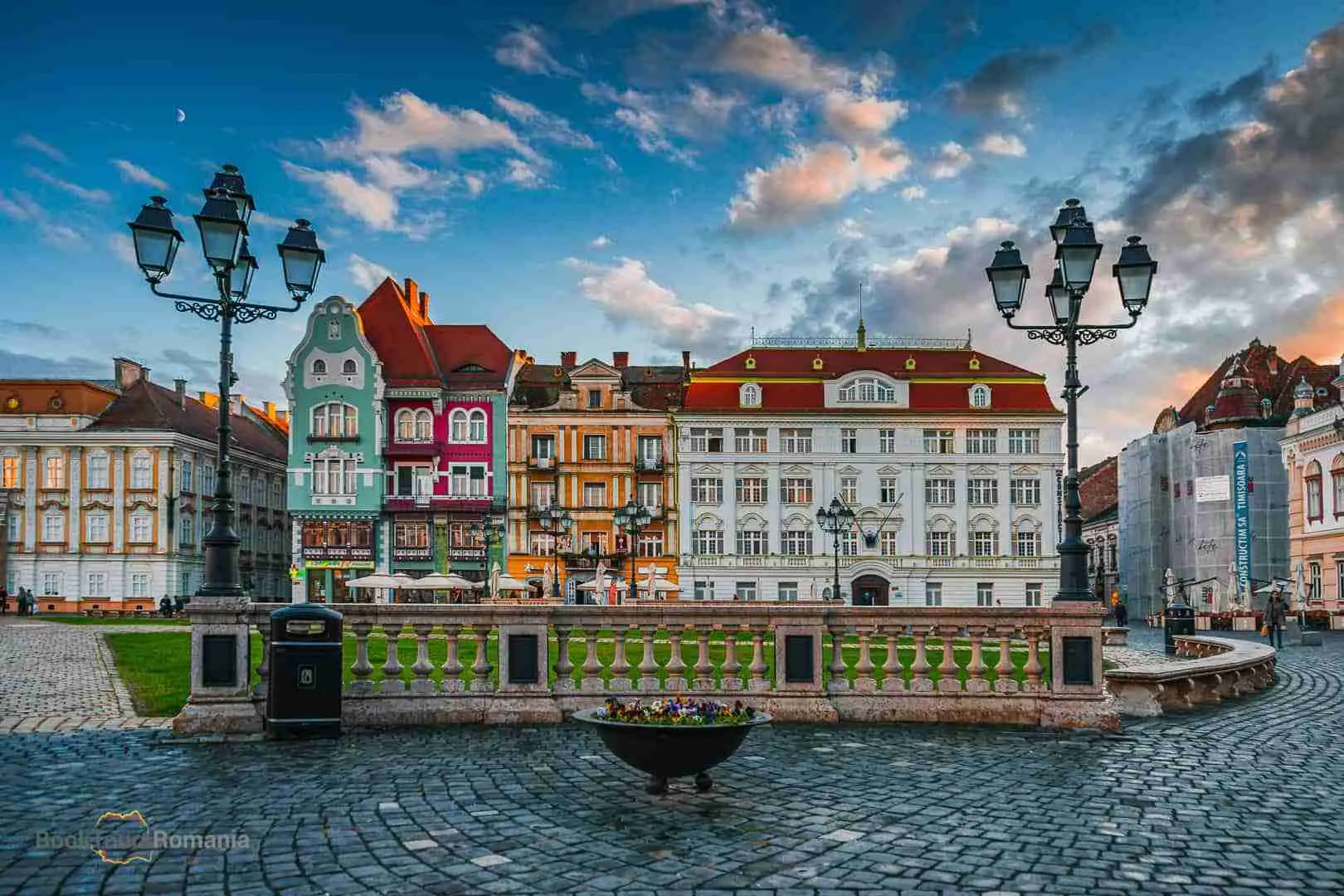
Unirii Square (Piaţa Unirii)
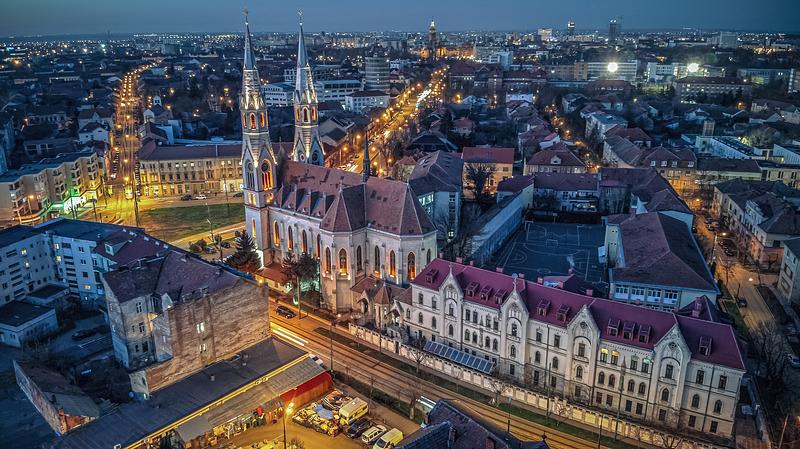
The oldest city square, set out in the Baroque style, is surrounded by an array of beautiful, well-proportioned architecture: the Roman-Catholic cathedral of St George, the Baroque Palace (currently hosting the Museum of Art), the Episcopal Office, the Serbian Orthodox Cathedral, and the Nikolaus Lenau Theoretical High School. At the centre of the square is a baroque trinity or plague column. In front of the chemist’s shop near the Baroque Palace, among the cobbles of the square, can still be seen imprinted in stone the layout of the former Timişoara fortress, whose walls were pulled down in the 19th century. The Roman-Catholic Cathedral, the most important work of Baroque architecture in Timişoara was designed by the famous Austrian architect Fischer von Erlach and started in 1736. The main altar painting was made by a famous artist who studied at the Academy of Belle Arts in Vienna.
The Roman-Catholic Cathedral: 12, Unirii Square
Due to its special acoustics, remarkable organ concerts can be enjoyed in the cathedral
Liturgical services in Hungarian, German and Romanian are held on a regular basis in the cathedral
Liberty Square (Piaţa Libertăţii)
One of the oldest city squares, Liberty Square is the site where the old City Hall and Saint John of Nepomuk monument are located; the latter was built in 1756 by two Viennese sculptors to commemorate the victims of the plague epidemics of 1738-1739. The central figure of the monument is the Prague Saint John of Nepomuk, the patron of Banat Catholics, above which Saint Mary is represented wearing a star crown around her head.
Victory Square (Piaţa Victoriei)
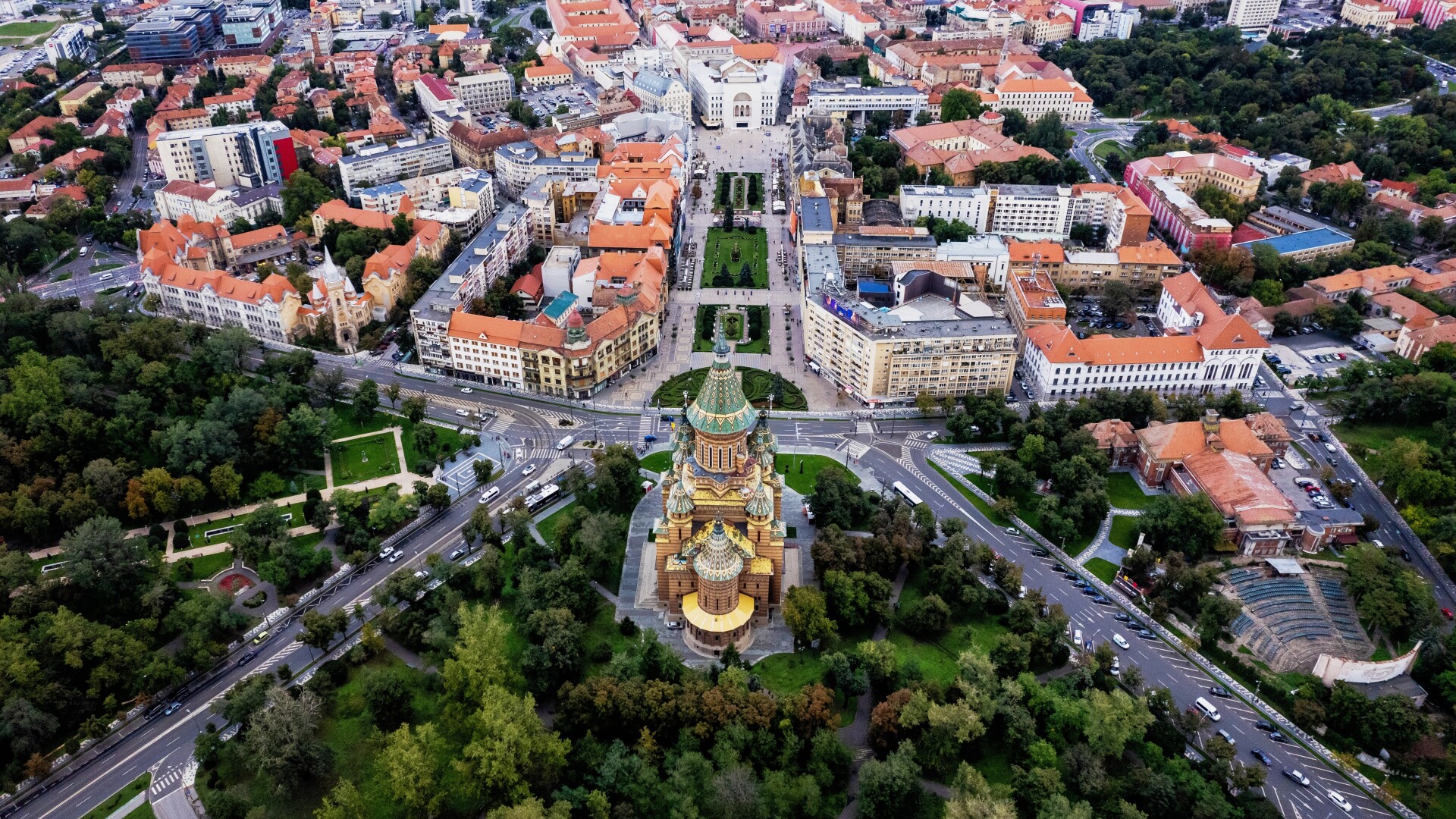
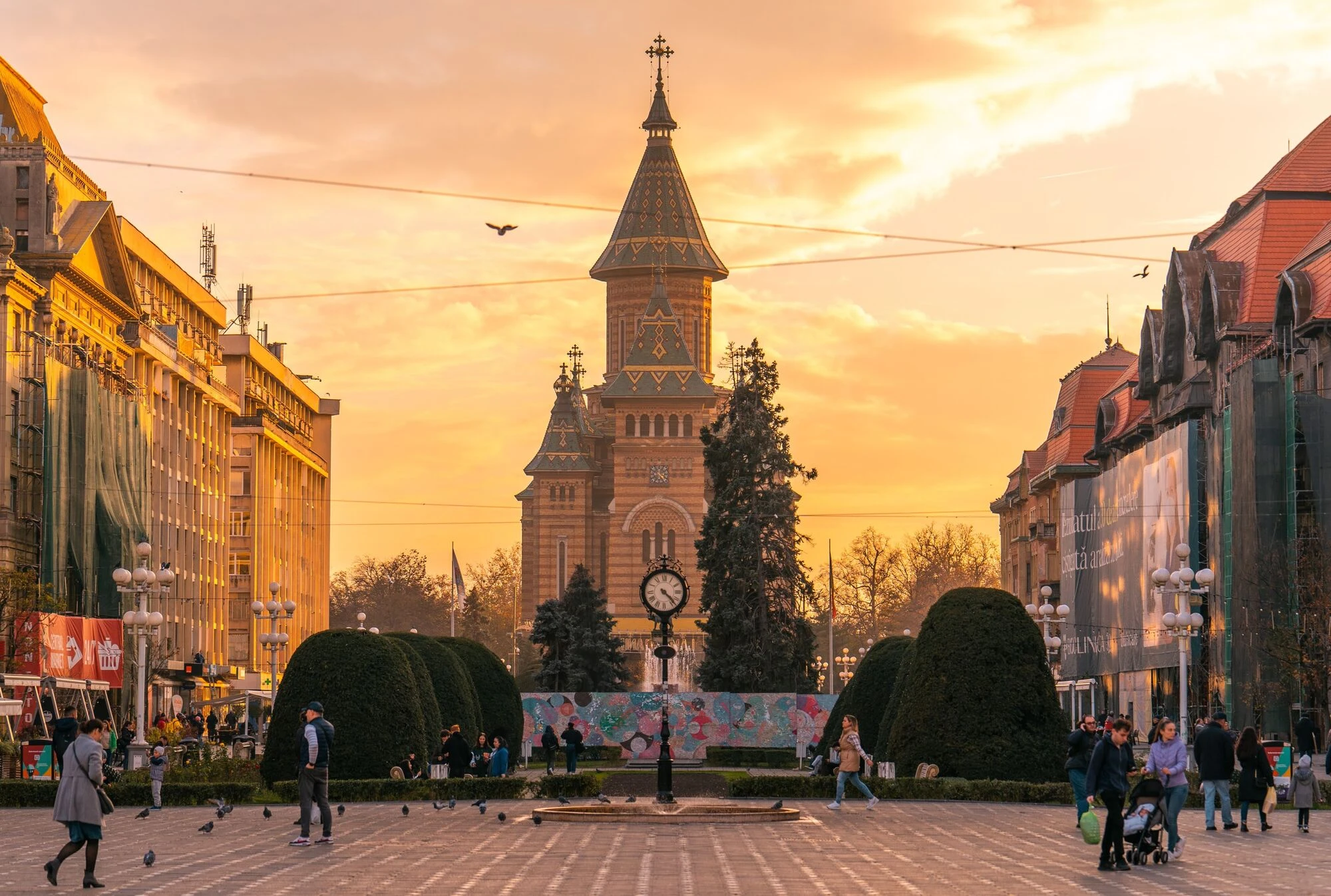
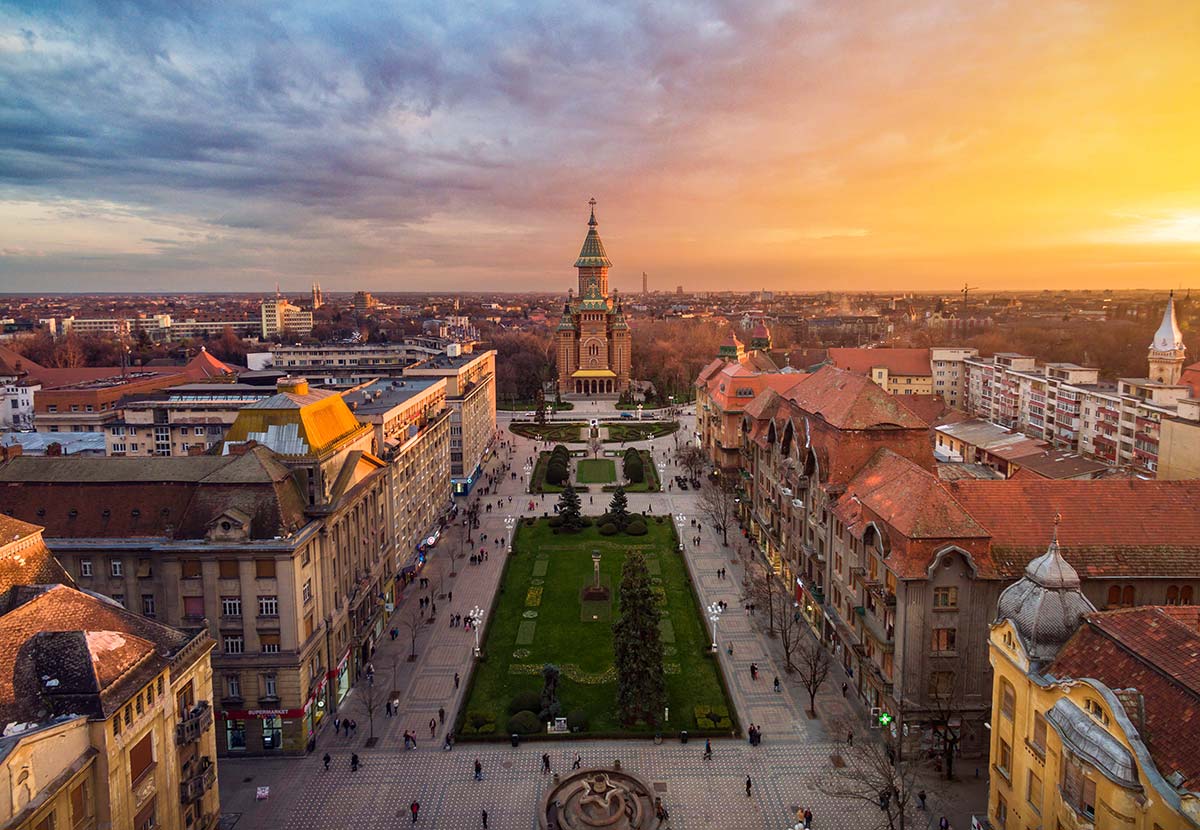
Victory Square, which witnessed the start of the 1989 Revolution, is Timişoara’s cultural centre. The metropolitan cathedral, built in a Byzantine Moldavian style, with spires covered in enamelled tiles, dominates the south side of the square. At the opposite end you can see the theatre and opera, which was built at the end of the 19th century by two Viennese architects and which hosts no less than four important cultural institutions: the Romanian Opera, the National Theatre, the German Theatre and the Hungarian Theatre.
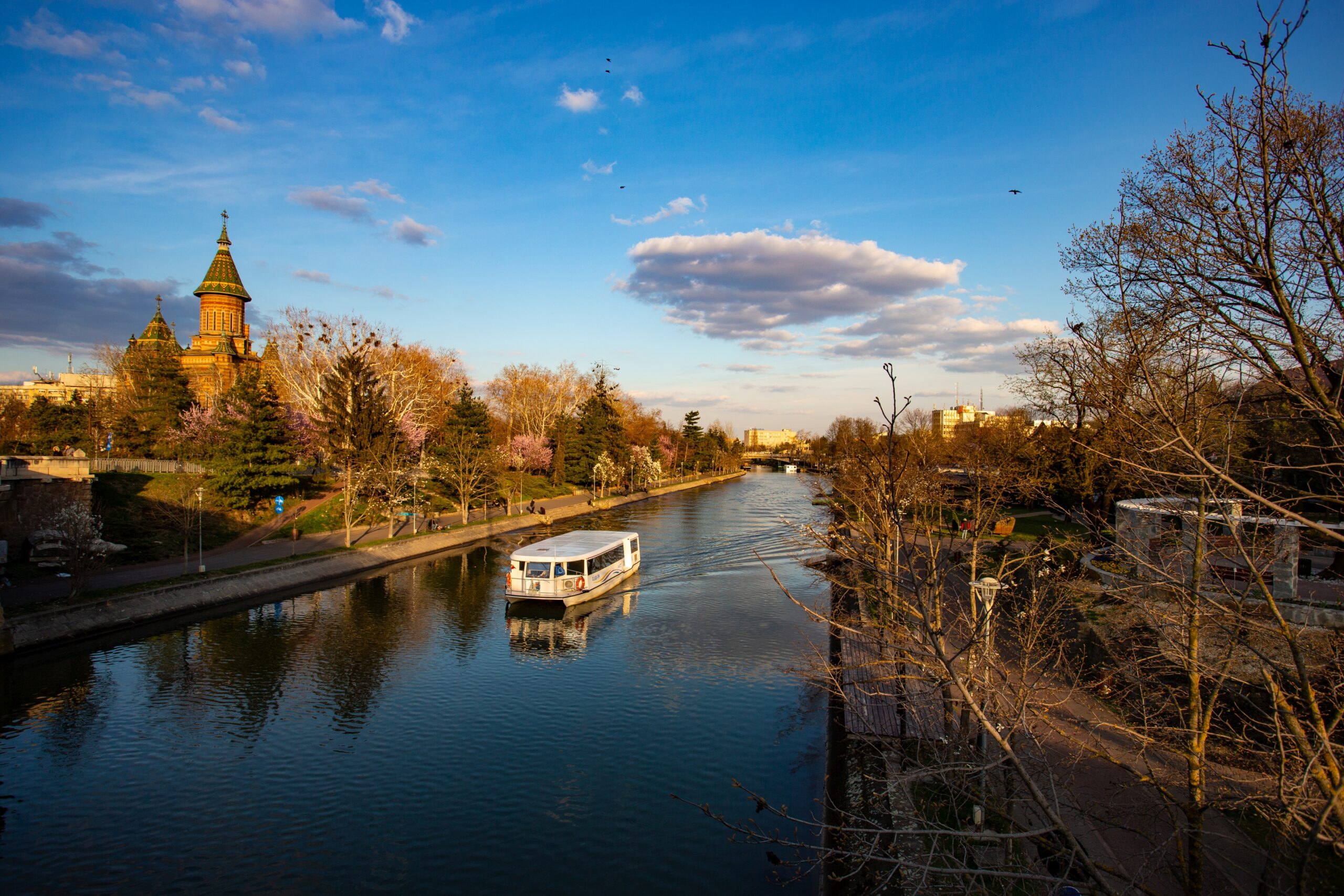
A flower carpet and a fish fountain decorate the central part of the square. The pedestrian area hosts winter or 1st March fairs, concerts and other cultural events. The Huniade Castle, the oldest building in Timişoara, which is home to the Banat Museum, and the Bega Canal are quickly reached from Piaţa Victoriei.
The Romanian National Opera: 2, Mărăşeşti Street
The building hosting four different art institutions is unique in the world.
The Metropolitan Cathedral
One of the symbols of the city, the cathedral was built between 1936 and 1946. Its architectural style combines Byzantine and old Romanian Moldavian elements. The cathedral is 83 metres high and has 11 spires covered in coloured enamelled tiles displaying typical Romanian decorative patterns; the floor is covered in mosaic imitating the style of Banat carpets. The seven bells which weigh together eight tons, each matching a musical tone, were cast in a very rare material, brought from Sumatra and Borneo and tuned by a Romanian composer.
The Metropolitan Cathedral of Timişoara is the largest religious building in the city.
The Synagogue in Cetate
The Jewish worship house located in the Cetate neighbourhood of Timişoara was built between 1863 and 1865, based on a design by a Viennese architect. The synagogue, which has a capacity of approximately 3,000 people, was built in an eclectic manner, displaying features of the Moorish-style reminiscent of the old community of Spanish Jews of Timişoara. It was used for almost 100 years by the Neologue Jewish community, but deteriorated at the end of the communist period and to be was closed when most of the Jews still remaining in the city after World War II emigrated to Israel.
The synagogue was renovated from 2000 to 2005, and then reopened after 20 years with a festive concert.