

The voivodes and kings of Romania rest peacefully in a town that preserves its old glory.
Curtea de Argeş was the first capital of Wallachia, the territory that extended from the Carpathian ridges to the north downto the Danube and the Baragan Plain. The voivodes established their residence in the ‘court’ on the Argeş River during the 14th century. Many international relations in the South-East Europe of the 15th century were negotiated here. The first Mint and the first metropolis in the country were established here while the Church of Argeş Monastery, which was also constructed during this period, is one of the most valuable religious constructions in the area. Curtea de Argeş lost of its influence in during the Middle Ages as successive Princes moves the capital to Târgovişte and subsequently to Bucharest, At the end of the 19th century, Carol I built the Episcopal Palace, then, selected the Church of Argeş Monastery as the burial place for the Royal Family.
Argeş Monastery
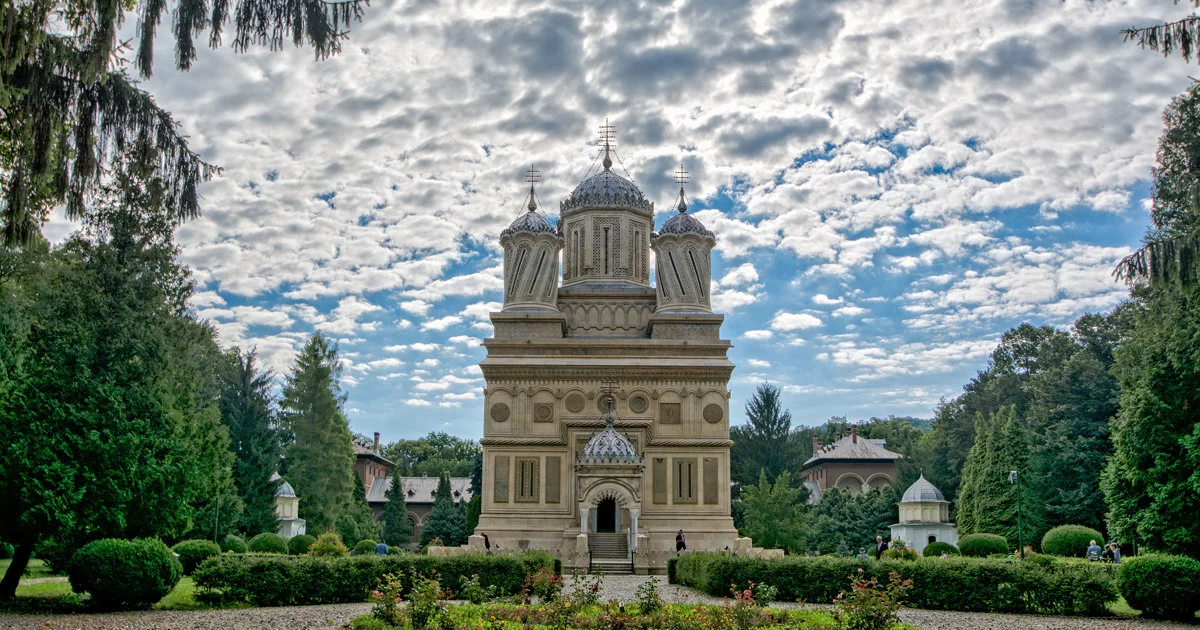
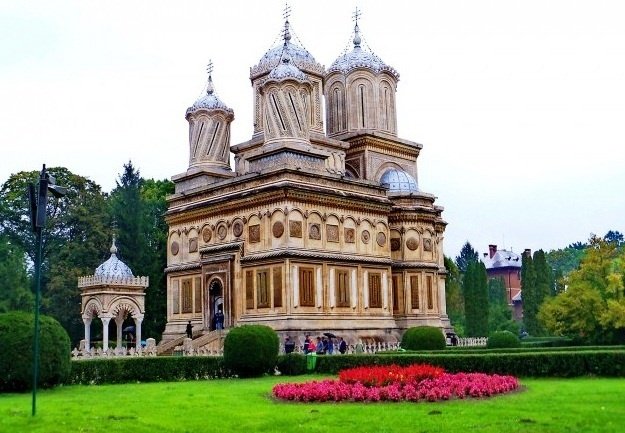
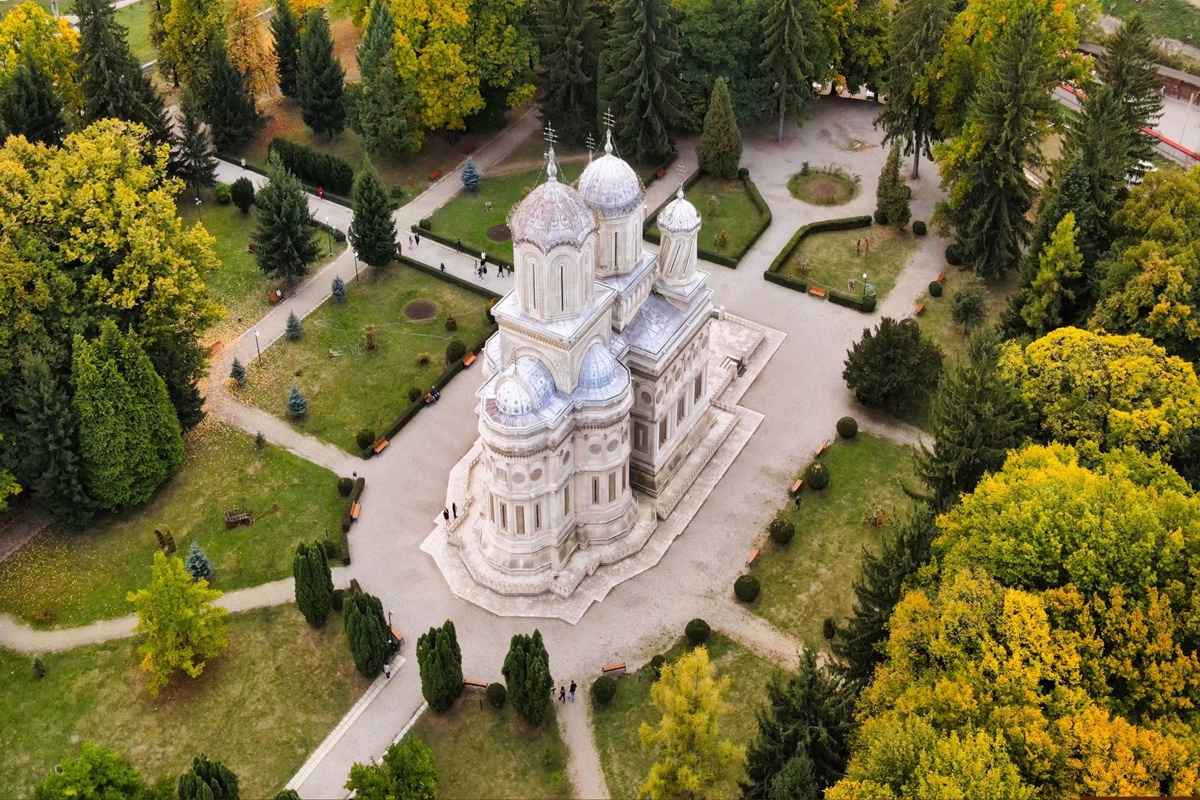
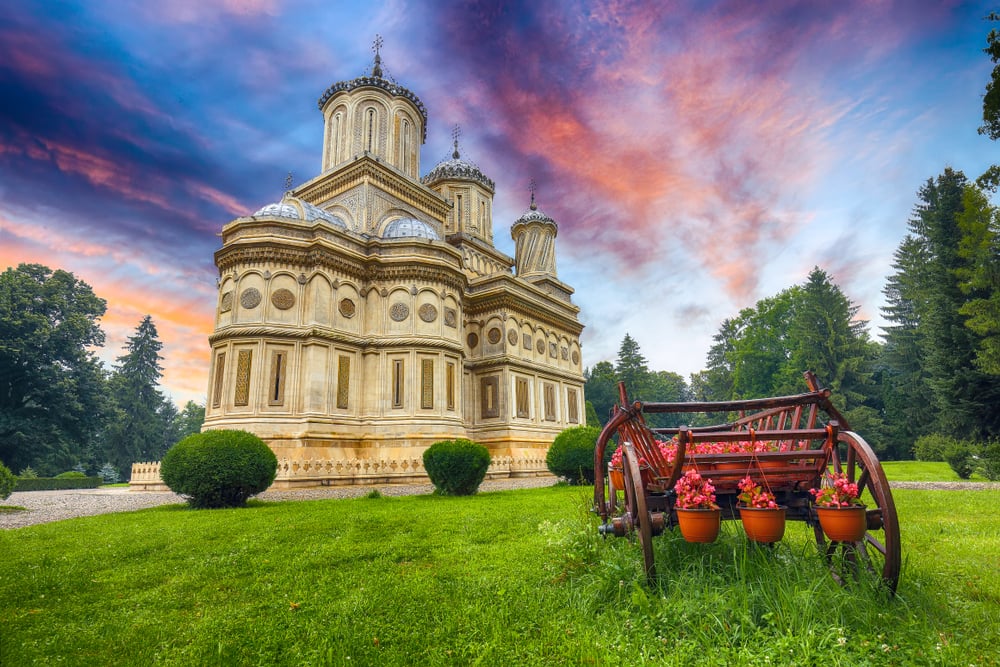
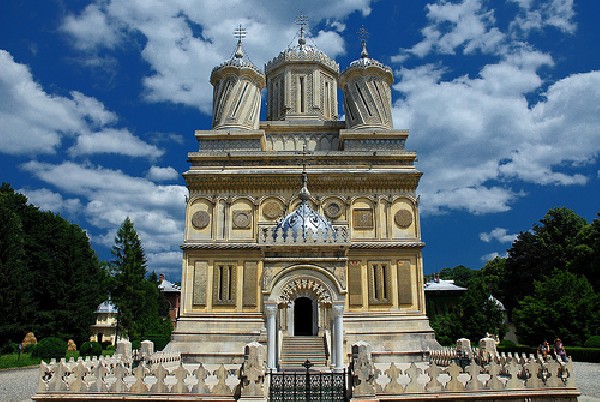
The Church of Argeş Monastery, built at the beginning of the 15th century, during the rule of Neagoe Basarab stands in a French style park, in front of the Episcopal Palace. The exterior of the church is decorated in an Oriental style. The interior is dominated by twelve columns with floral decorations and the crypts of two medieval rulers and two royal couples. According to legend during the construction of the church the walls erected during the day unexplainably fell down every night. To break the curse, the church builder, Manole, is said to have immured Ana, his wife, into the walls of the church. Then, when the monastery was completed, Neagoe Basarab ordered that the scaffolding was pulled down so trapping Manole on the roof so that he could not build another church more beautiful than this monastery. Manole tried to jump off the roof, but he fell to his death and a spring of clear water appeared where he landed. Manole’s well can still be visited.
Legend has it that the Fountain of Manole, a spring of clear water, appeared in the place where the head of the builders fell to the ground.
Historical churches
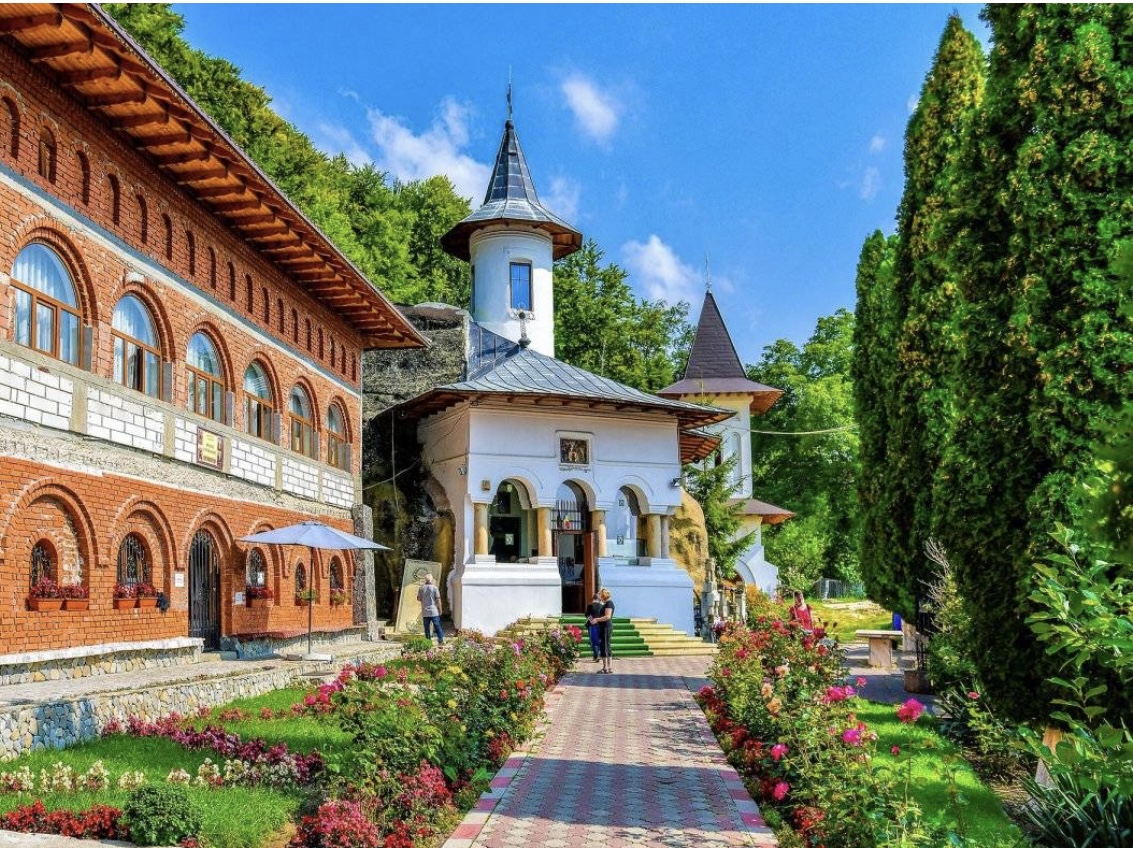
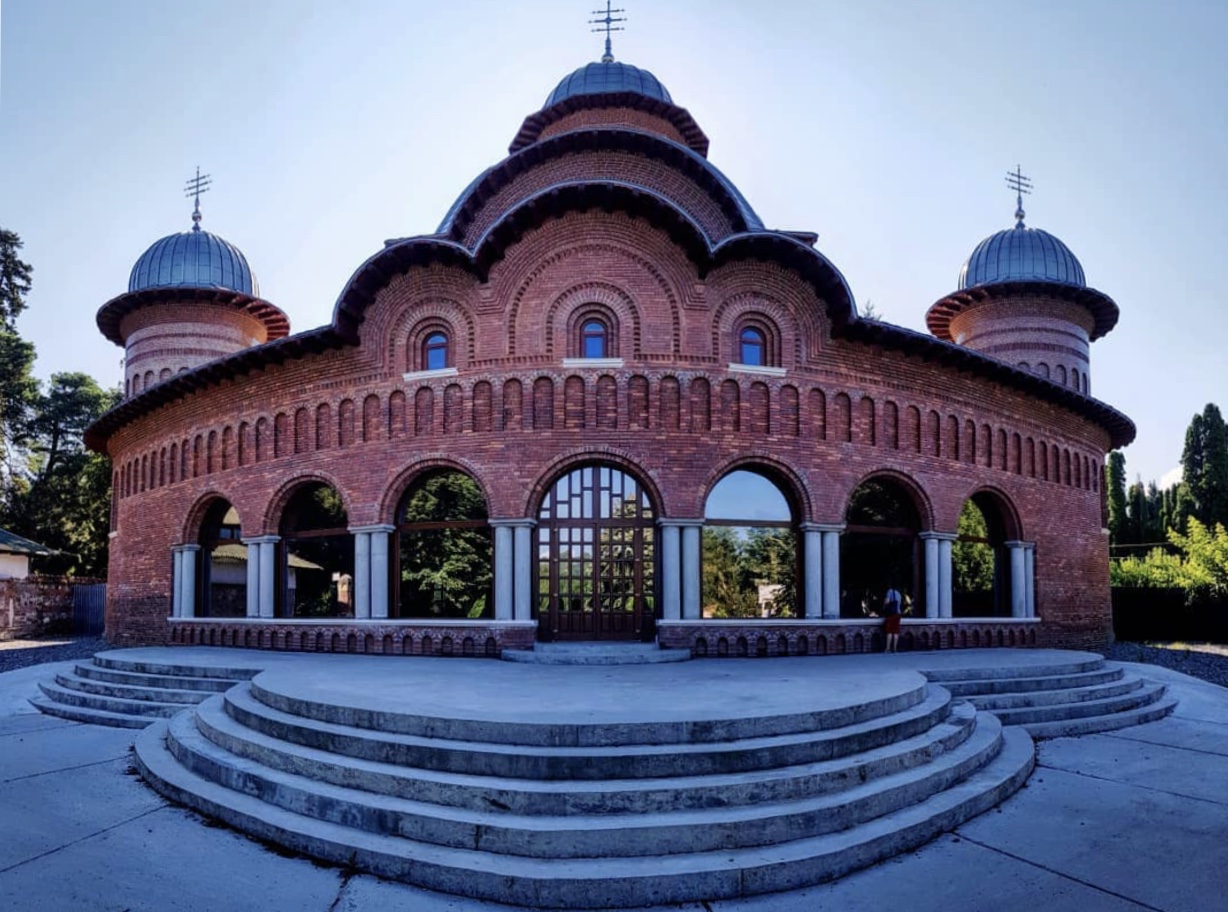
The place of the former Princely Court is dominated by one of the most representative monuments of medieval Romanian architecture, Biserica Domnească (the Princely Church), built in the mid-14th century. While the exterior part is dominated by simple masonry, of river stones and bricks, the Byzantine interior part has an inestimable artistic value. The original painting is very well preserved, with more than 300 frescos representing biblical scenes. Biserica Domnească became a royal necropolis and metropolitan centre, enjoying a respected position in the spiritual life of the country, until the beginning of the 15th century, when the capital was moved to Târgovişte. A religious service is performed on Saint Nicholas’ day, the day of patron of the church. The ruins of the 700-year old San Nicoară Church can be seen opposite to Biserica Domnească. Its high tower was a fire tower and observation point, but was also used to communicate by torches with Poienari Fortress, the castle of Vlad Tepes, 25 kilometres up the Arges Valley.
Transfăgăraşan Highway
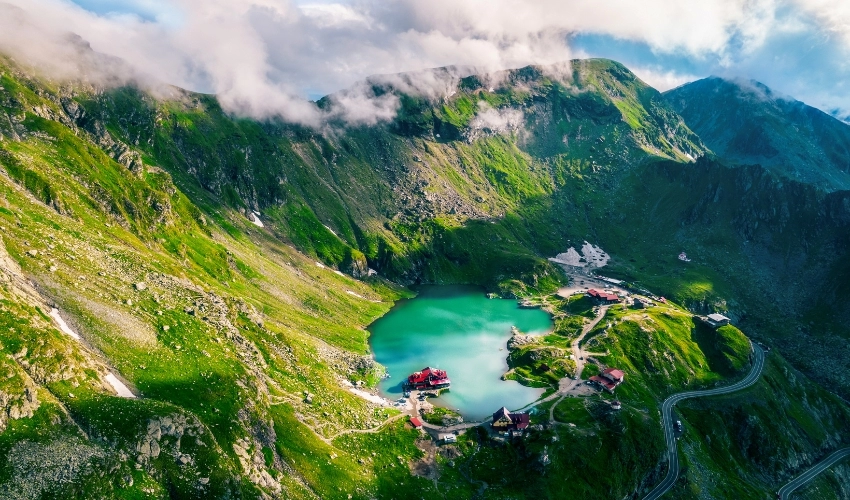
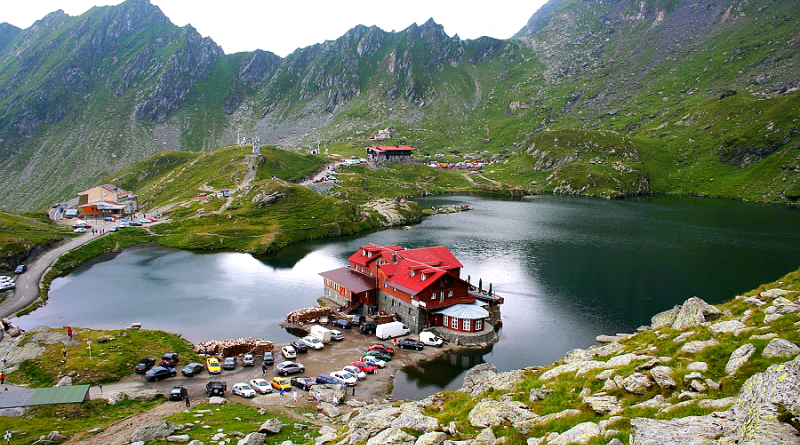
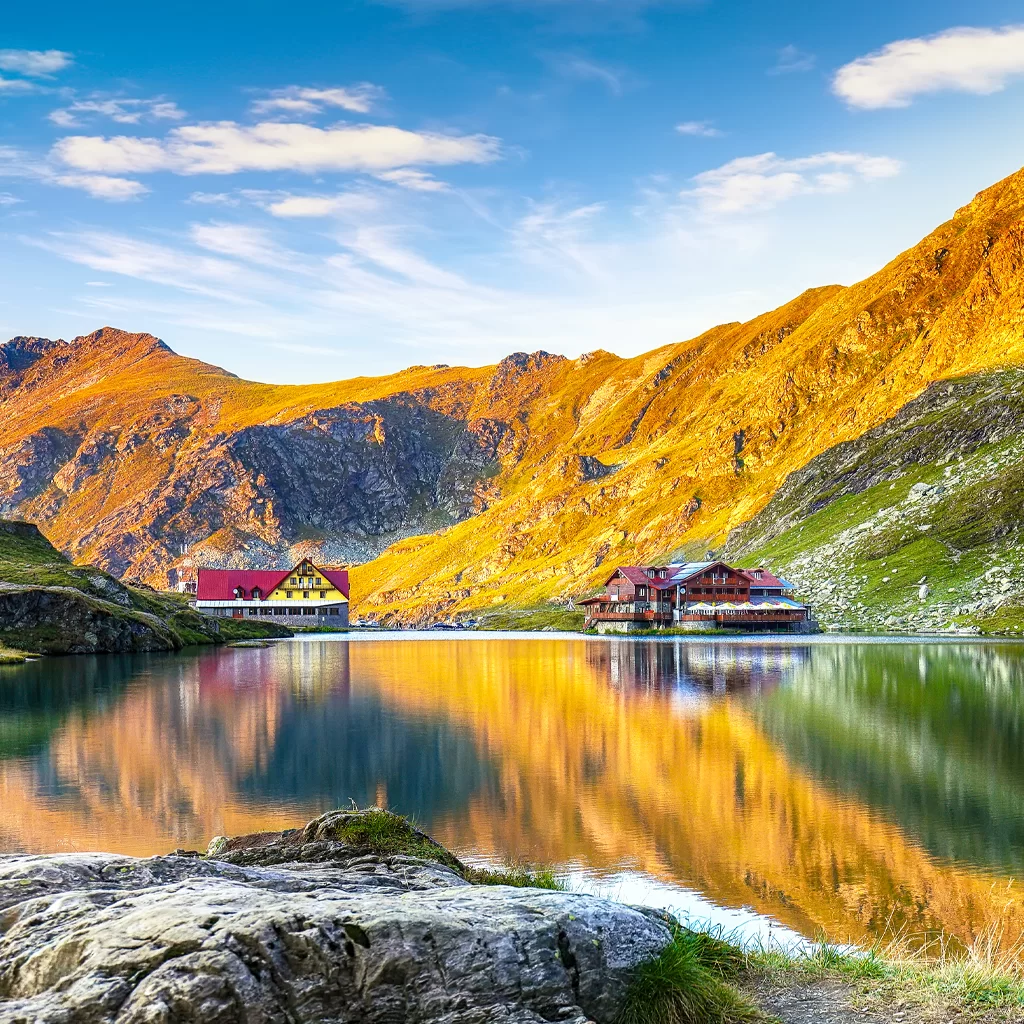
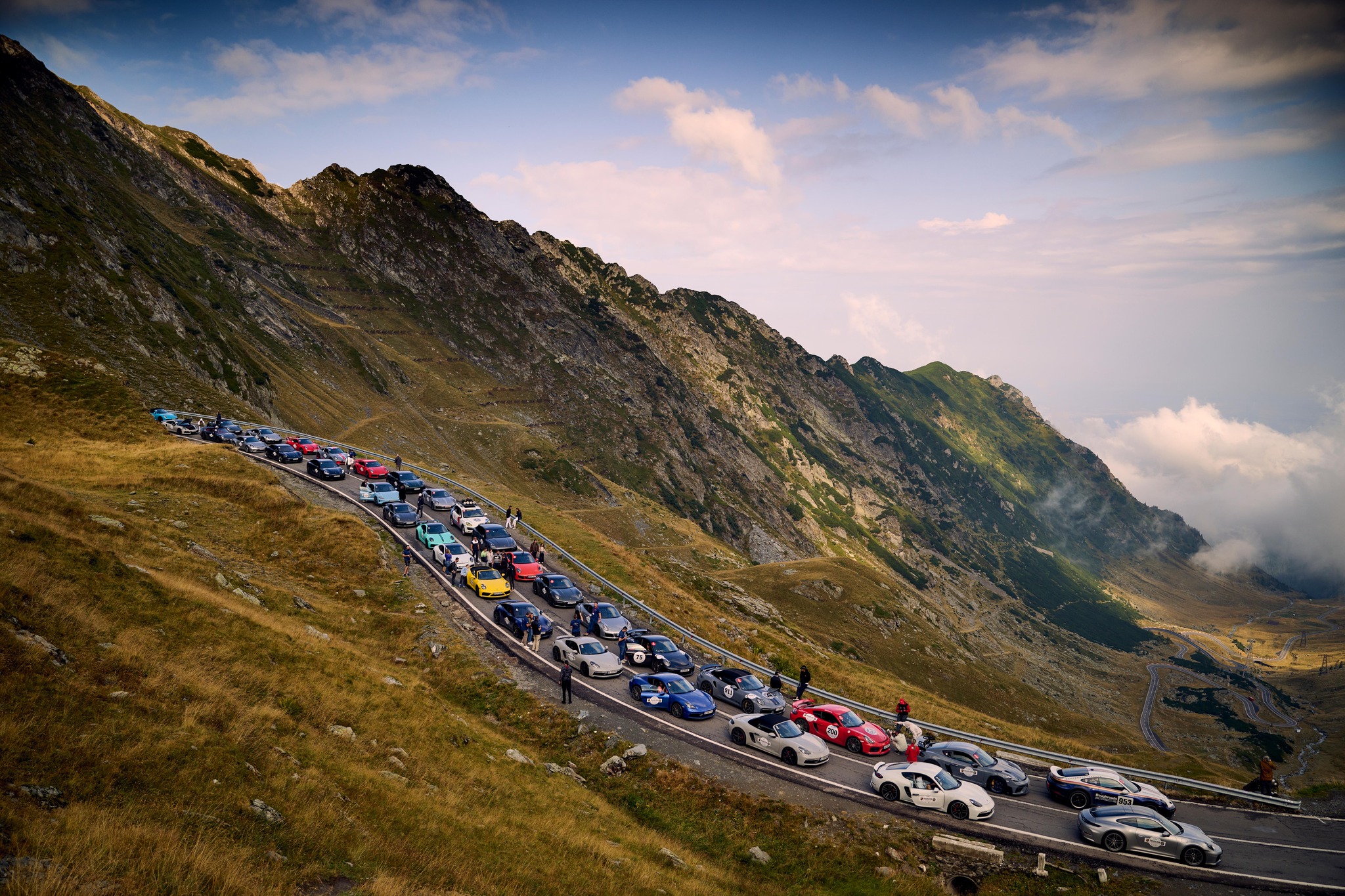
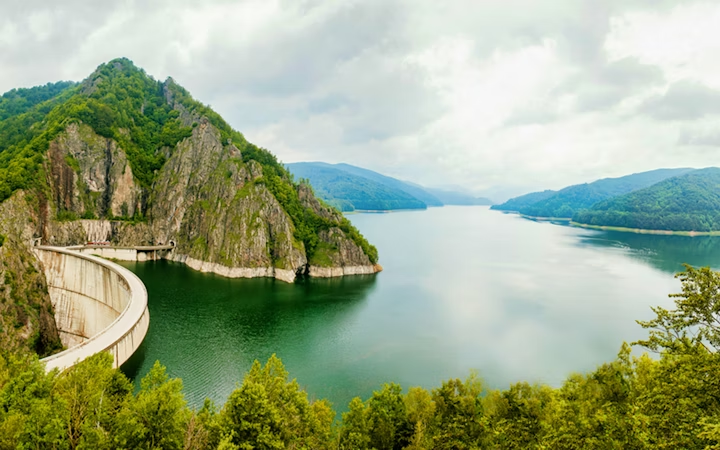
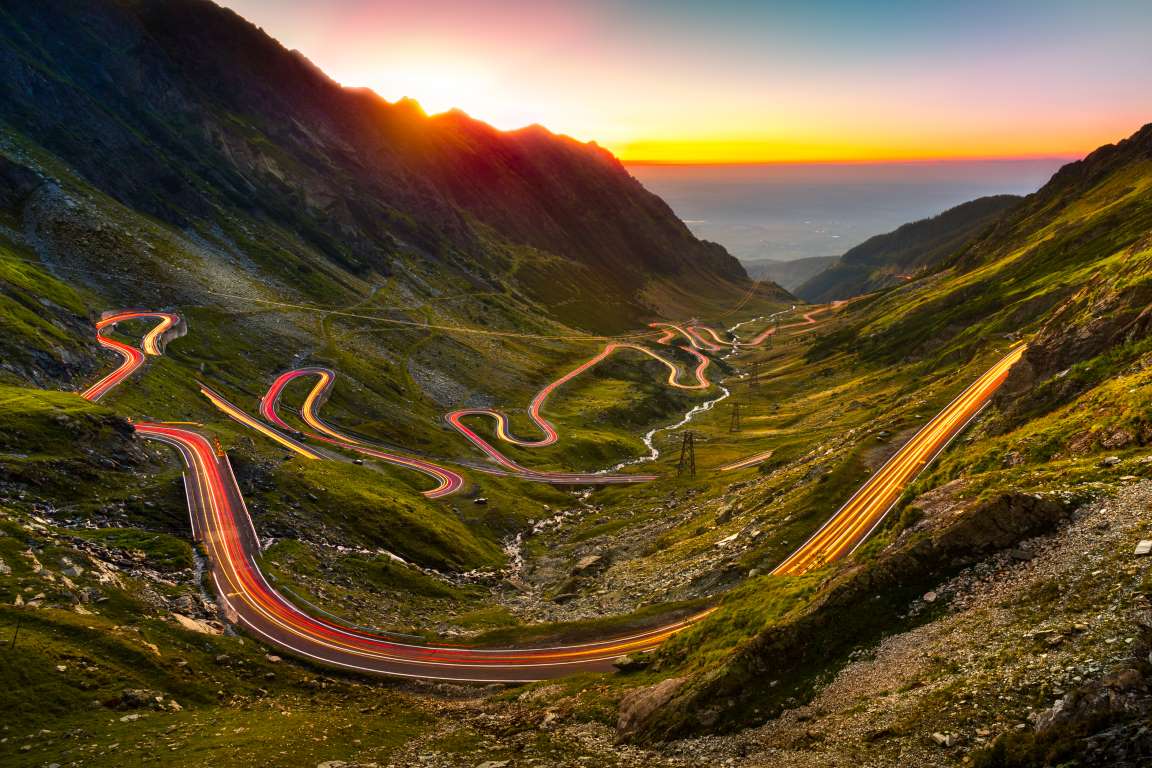
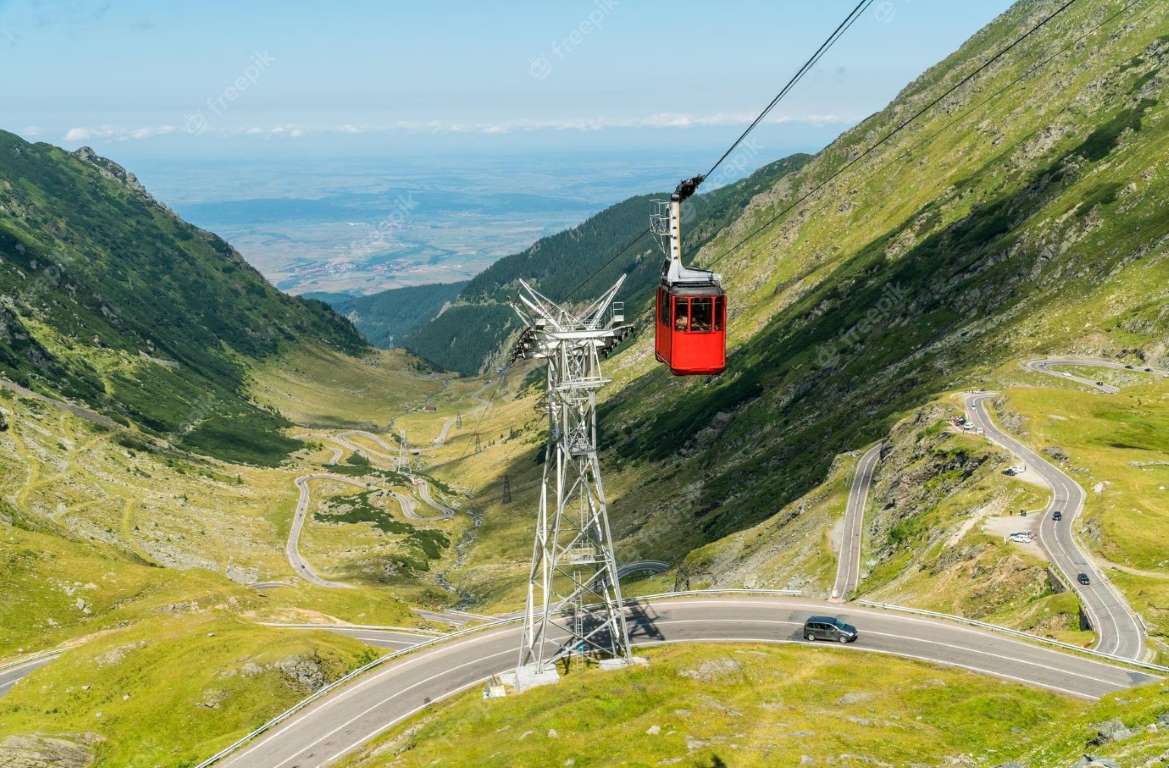
Curtea de Argeş is situated close to Transfăgăraşan Highway, one of the most spectacular roads in Europe. 20 kilometres north of the town, the road begins to wind up through thick forests, to the dam and lake Vidraru, then onwards corkscrewing round hairpin bends towards the Făgăraş ridge. It then passes through a kilometre long tunnel, climbs to a height of more than 2,000 metres, then abruptly descends down the other side of the Carpathian Mountains, into Transylvania. The Transfăgărăşan Highway was opened in 1974, at a high cost both financially and as human effort. The road closes with the first snows, often as early as October and can stay closed until June or July.
The ruin of Poienari Fortress is perched high above the Argeş Gorge on a crag overlooking the Curtea de Argeş end of the road. 1,500 steps lead steeply up through the trees to this small castle, the refuge of Vlad Ţepeş (Dracula) who escaped here from the Ottoman Turks. The fortress was the last refuge of Wallachian rulers against the attackers.
