
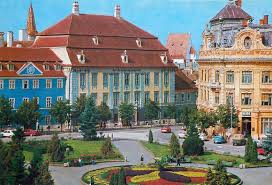
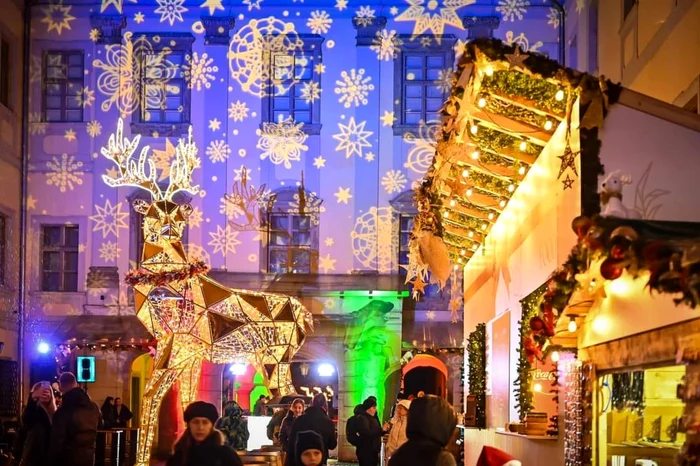
This beautiful Transylvanian city resembles the Western European main cities.
Designated as the European Capital of Culture in 2007, together with Luxembourg, Sibiu passed through several years of an extended restoration process and its historical centre is currently a small, but charming medieval city which you can cross on foot. Walking on pedestrian streets and squares surrounded by historic buildings. Also known under the German name Hermannstadt, Sibiu has always been an important centre of the German community of Transylvania. In fact, the city was established in the 12th century by the German colonists, known here as and in the 17th century it was considered the most Eastern city of Europe. Home to a mixed Romanian, German and Hungarian population, Sibiu brings together the three cultures that also influenced the architectural style of the city.
The Big Square (Piaţa Mare)
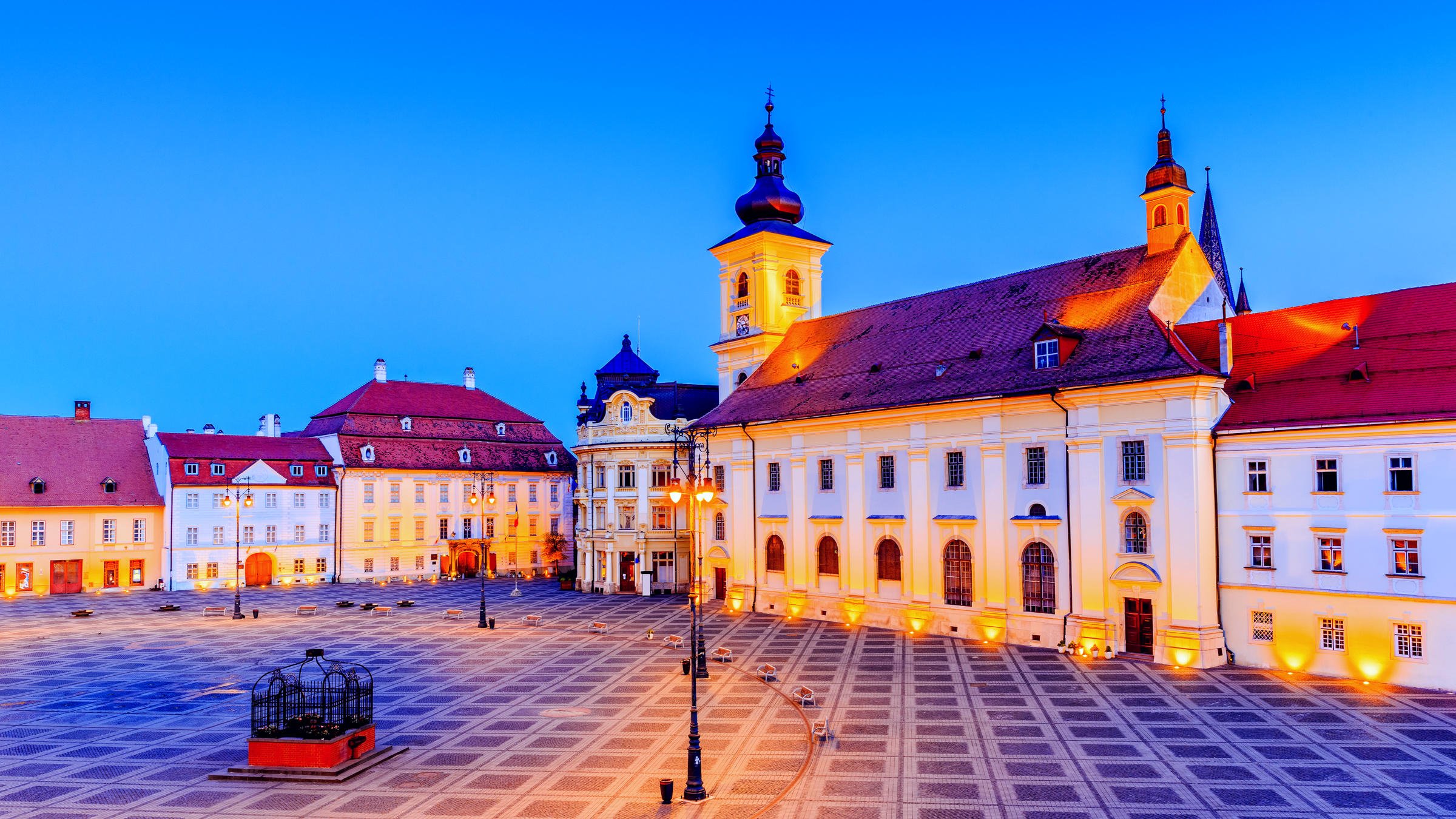
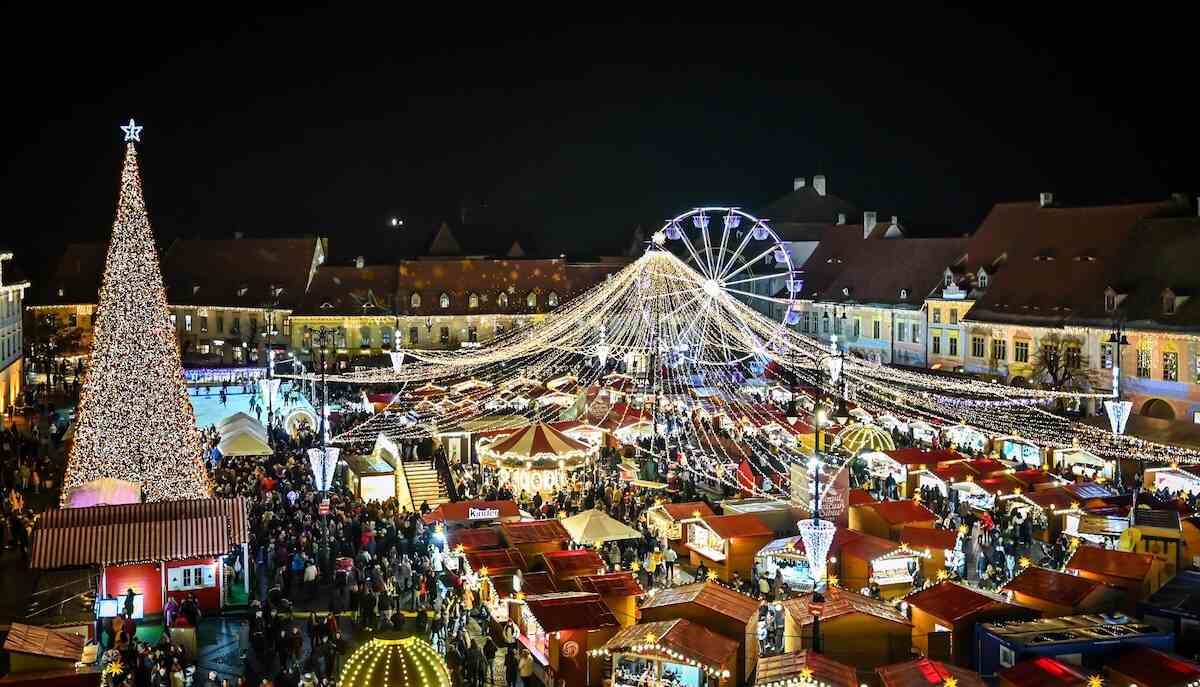
Sibiu’s Big Square, one of the largest in Transylvania, has always been the true symbol of the city. During the 15th century it was the main cereal market, and also a place for public meetings and executions. The historic mansions and buildings which surround the square exhibit elements of Gothic, Renaissance and baroque architecture. These include the Brukenthal Palace, and nearby the ‘Roman Emperor’ Hotel, and the ‘Blue Star’ Inn where the Austrian Emperor Josef II stayed in 1773.
In December 1989, the Big Square was the focal point of the revolution in Sibiu, a fact commemorated by a memorial plate set in the granite pavement. Every year, the square hosts ArtMania, one of the most important rock festivals in the country.
Brukenthal National Museum: 4-5, Big Square (Piaţa Mare Nr 4-5)
Opening hours: Tuesday – Sunday: 10:00 – 18:00. The ticket office closes at 17:15 in winter (between 21 October and 21 March). The museum is closed every Monday.
The Council Tower (Turnul Sfatului) is one of the oldest buildings in Sibiu. Climb the steps for a view over the city.
The Small Square (Piaţa Mică)
Sibiu’s Small Square, which was established between the 14th and 16th centuries, is the old commercial centre of the city and one of the cultural focus points of modern Sibiu. Located between the Big Square and the Huet Square, this area is characterized by arches and the loggias which the old merchants used to protect their goods, the unusual dormer windows, which the locals call “the eyes of the city” and the forged iron lamps suspended from various architectural elements. The buildings around the square include bars and restaurants which place tables outside in the summer. The Pharmacy History Museum is housed here in the former chemist’s shop ‘La Ursul Negru’, where Samuel Hahnemann, the father of homeopathy worked for the best part of his life.
In spring, the Small Square becomes the main stage for the Sibiu Jazz Festival, one of the oldest jazz festivals in the world.
“Franz Binder” Universal Ethnography Museum
The Ethnography Museum, which is part of the Astra National Museum Complex, is situated in a Neo-gothic building in the Small Square. The permanent exhibition “Universal Art and Culture” was established during the last century with numerous art objects provided by many collectors (originating from North Africa, the Nile spring region, China, Japan, Oceania, Asia Minor, Brazil, Lapland, and Australia). Amongst the artefacts are an Egyptian mummy, and the gift collection of the former dictator Nicolae Ceauşescu.
Opening hours: Tuesday – Sunday, 10:00 – 18:00 (18 May – 1 October); 9:00 – 17:00 (1 October – 18 May). The museum offers free tour guides for organized groups that plan their visit in advance.
The Liar’s Bridge
This is the most mythical place in Sibiu. The Liar’s Bridge connects the two mediaeval neighbourhoods of Sibiu, the Lower Town and the Upper Town. Several legends are often recited about this bridge. One of them says that the bridge ‘feels’ every lie uttered by those who cross it and it starts to growl and creak in a threatening manner. Other legends mention the lies of lovers or of the merchants selling their goods in the area. In reality, the name of the bridge seems to originate in misinterpretation as the bridge had no support pillars, it was called the Liegenbrücke in German – the ‘lying bridge’ – a homophone of the word Lügenbrücke – the ‘liar’s bridge’.
The Evangelical Cathedral
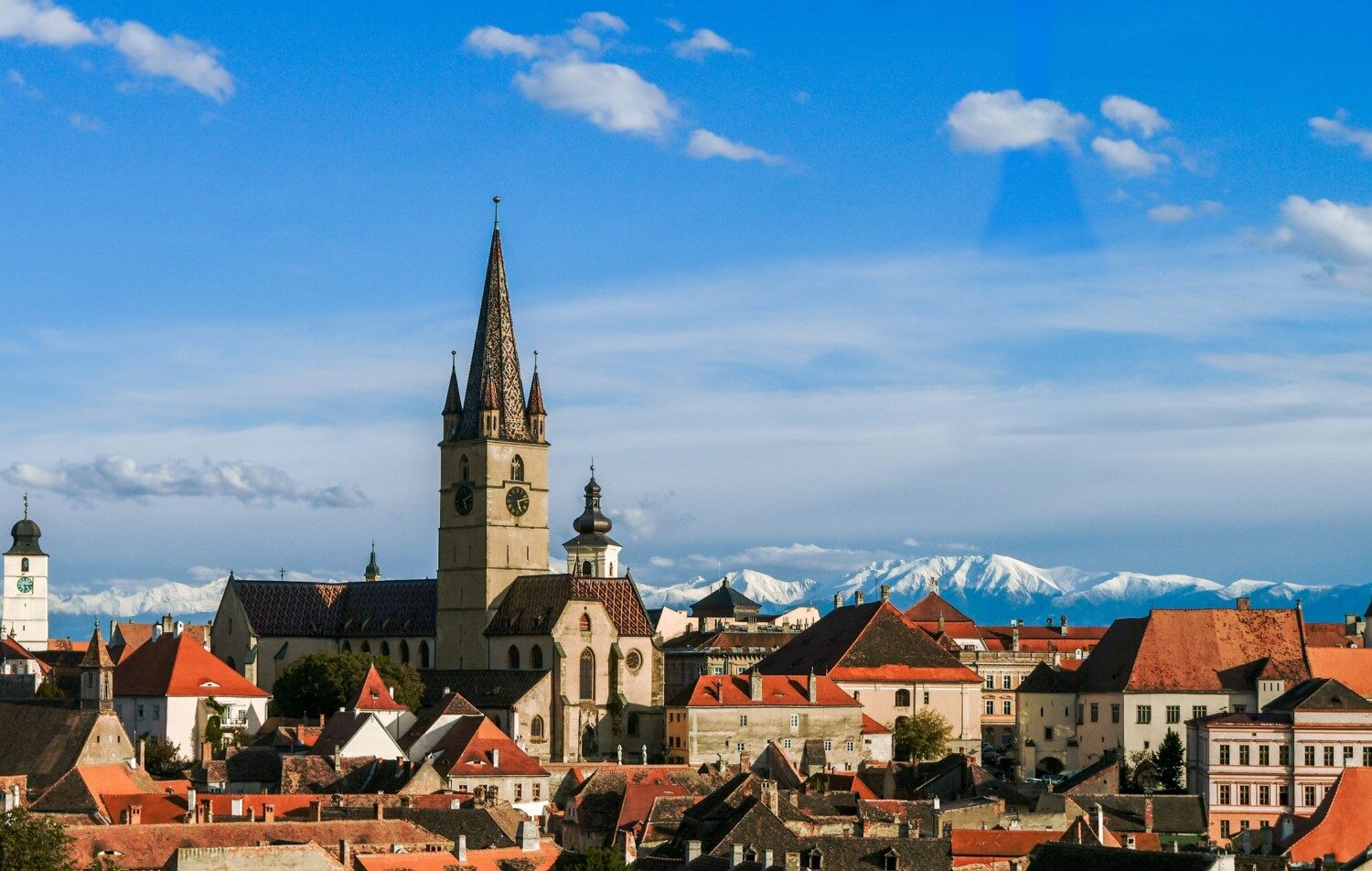
One of the most impressive buildings located in the historic centre of the city is the Evangelical Church in Huet Square which has the tallest steeple in Transylvania at over 73 metres. It can be seen from almost any part of the city. The church has a Baroque organ made by a Slovak craftsman in 1671 which replaced the first organ brought to Sibiu in the 16th century. In 1914 a large church organ was installed, the largest in South-Eastern Europe. It was completely refurbished in 1997 and organ recitals now take place from June to September. The impressive church building, built in the Gothic style with curved arches and tomb stones on the North wall was raised in the 16th century on the site of a Roman basilica dating from the 12th century. The statue of Bishop Georg Daniel Teutsch, erected in 1899, can be admired in front of the church.
In the summer season, every Wednesday from June to September, the evangelical church organizes organ concerts which attract many tourists.
The Passage of the Stairs
One of the most picturesque parts of the Old Town is the Passage of the Stairs, also known as the ‘Needle Wall’. It connects the Upper Town to the Lower Town by two flights of steps and arches which follow the fortified walls Evangelical Church. Built in the 13th century from stone and brick, the passage leads up to the Gate Tower, one of the oldest sections of the fortifications.
The Passage of the Stairs
One of the most picturesque parts of the Old Town is the Passage of the Stairs, also known as the ‘Needle Wall’. It connects the Upper Town to the Lower Town by two flights of steps and arches which follow the fortified walls Evangelical Church. Built in the 13th century from stone and brick, the passage leads up to the Gate Tower, one of the oldest sections of the fortifications.
Dumbrava Forest (Dumbrava Sibiului)
The Dumbrava forest covers an area of 1,000 hectares to the south-west of Sibiu. Researchers have been studying the varied flora of this natural park since the 17th century. More than half of the trees in the forest are over 100 years old, with some of the oaks more than 200 years old. The “Emperor’s Oak” was an impressive 700 years old when it was felled. You can still see the 10.3 m diameter stump. The forest is home for many deer, squirrels, wild boar and foxes, and a great variety of birds including finches, woodpeckers, jays, owls and ravens.
Today, the natural park Dumbrava Sibiului, encompasses several lakes originating in Valea Aurie creek, and is crossed by public footpaths. It also contains the excellent Astra open air museum, a zoo and a number of hotels and entertainment areas.
The Astra open air museum: Calea Răşinari, 4 km from Sibiu in the Dumbrava Forest
Opening hours: Monday – Sunday: 9:00 – 17:00
The Museum of Traditional Folk Civilisation located in Dumbrava Sibiului is one of the largest, and most impressive, open air museums in Europe. It comprises over 300 rural dwellings, together with churches, inns and a host of working water wheels and wind mills representing rural technology from all over Romania.
The Zoo
The first zoo in Romania was founded in 1929 in Dumbrava Sibiului. Occupying a 6 hectare area, it currently has around 47 species of animals and birds, including monkeys, bears, white wolves, Carpathian wolves, foxes, tigers, lions, jaguars, pumas, wild boars, llamas, Carpathian stags, fallow deer, white buffaloes, ponies, one reticulated python, a crocodile (the largest in Romania – two metres long), pheasants, parrots, peacocks, and pigeons. The zoo can be visited daily between 9:00 -17:00. The tourists can also ride a hydro-bicycle on the lake.
Răşinari
Passing the zoo, the road between Sibiu and Păltiniş mountain resort goes through Răşinari village, which is connected to the city by a 13 kilometre long tram line. The small, one-car tram which travels between Sibiu and Răşinari and back several times per day, and is sometimes the stage for theatre plays. In the village you can roam for hours on its charming lanes going up and down along the houses and courtyards surrounded by tall gates and walls.
Răşinari is the native village of several important Romanian cultural figures, such as the poet Octavian Goga and the famous philosopher Emil Cioran. The houses where they lived are open to visitors. Other tourist attractions include the Ethnographic Museum, Saint Paraschiva Old Church, Saint Elijah Church, the Hill Church, the old school and the ruins of an earth fortress dating from the 13th century.
Răşinari provides tourist accommodation in local guesthouses.
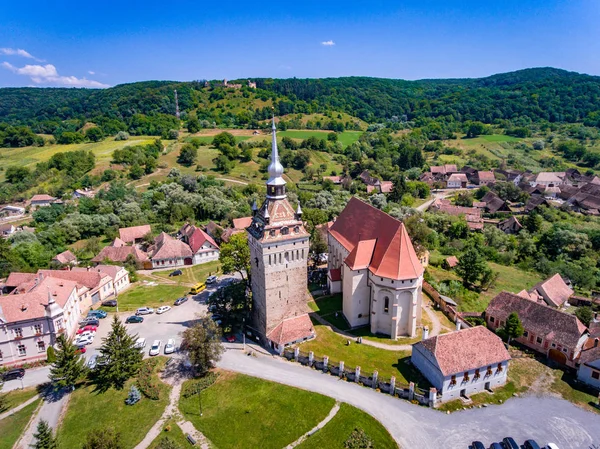
The Old Church, a Baroque monument from the 18th century, built from stone and brick.
