A city full of life and energy, Cluj is one of the major political, economic and university centres in Romania.
The Romans established Napoca as one of the key settlements of Roman Dacia during the 2nd and 3rd centuries, but Napoca fortress scaled back its growth after the Roman army withdrew from the current territory of Romania. The city flourished again in the Middle Ages following the arrival of German colonists in Transylvania.
In the 15th century, the fortress became a major commercial centre which favoured the development of craft guilds. Until the 17th century, most of the population was of German origin, but subsequently the Hungarian speaking population that is nowadays the biggest minority began to expand. The city which has an important university is nowadays a truly a multicultural hub.
Hungarian and Austrian influence have shaped Cluj as the capital of an autonomous province, then as part of the Austrian-Hungarian Empire and more recently when Transylvania was united with Romania.
During the half a century of communist rule new industries developed and residential areas full of blocks of flats spread out from the centre. However, Cluj preserved many of its beautiful old buildings in the city centre.
Avram Iancu Square
The Orthodox Cathedral in the square adjacent to the National Theatre is regarded as the current city centre. Built between 1921-1933, after the unification of Transylvania with Romania, the cathedral is 64 metres high and is visible from all the hills surrounding the city. Erected in the Byzantine style and featuring an impressive dome and four spires, the cathedral was inaugurated in 1933 in the presence of Romania’s king, Carol the 2nd. An important religious centre of the country, this building is used for religious services by the archbishop of Vad, Feleac and Cluj. The building serves as the Metropolitan Cathedral of Cluj, Alba, Crişana and Maramureş.
The space in front of the cathedral was known in the course of time under several names. Nowadays the square is called Avram Iancu, the leader of the 1848 revolution in Transylvania. A statue of him was recently erected in front of the cathedral. The Faculty of Orthodox Theology, the beautiful art nouveau National Theatre, the Palace of Justice and the Prefecture are the main buildings in the vicinity of this square.
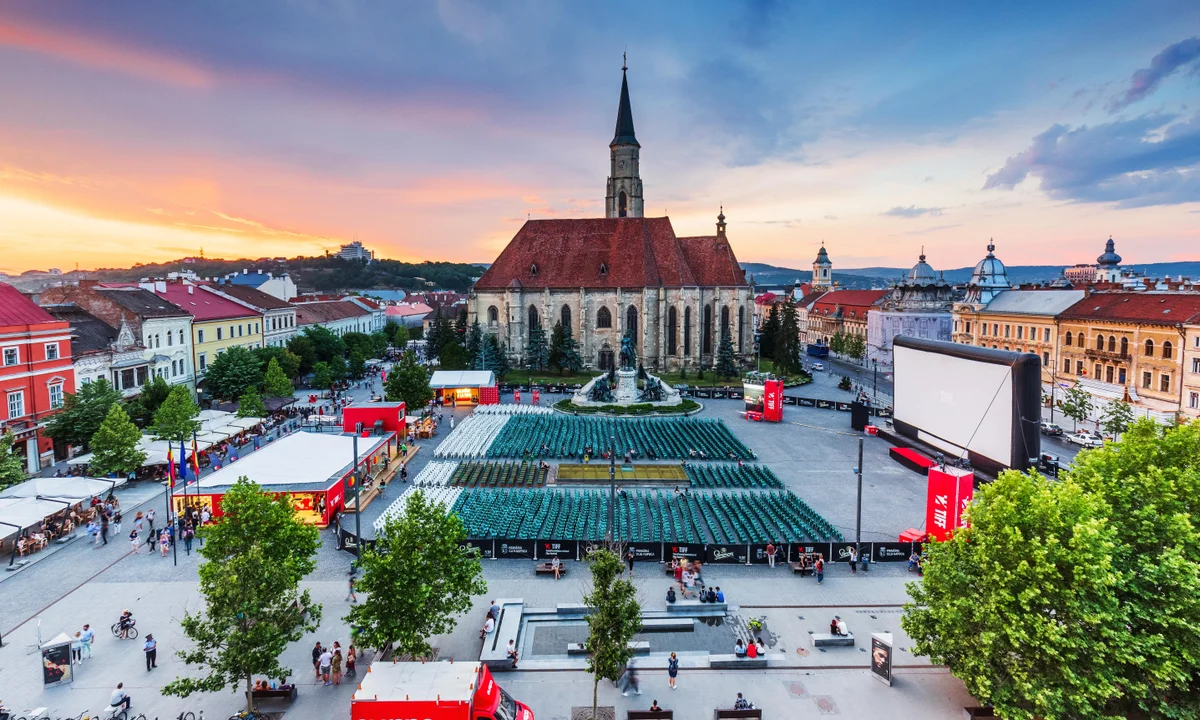
Saint Michael Cathedral
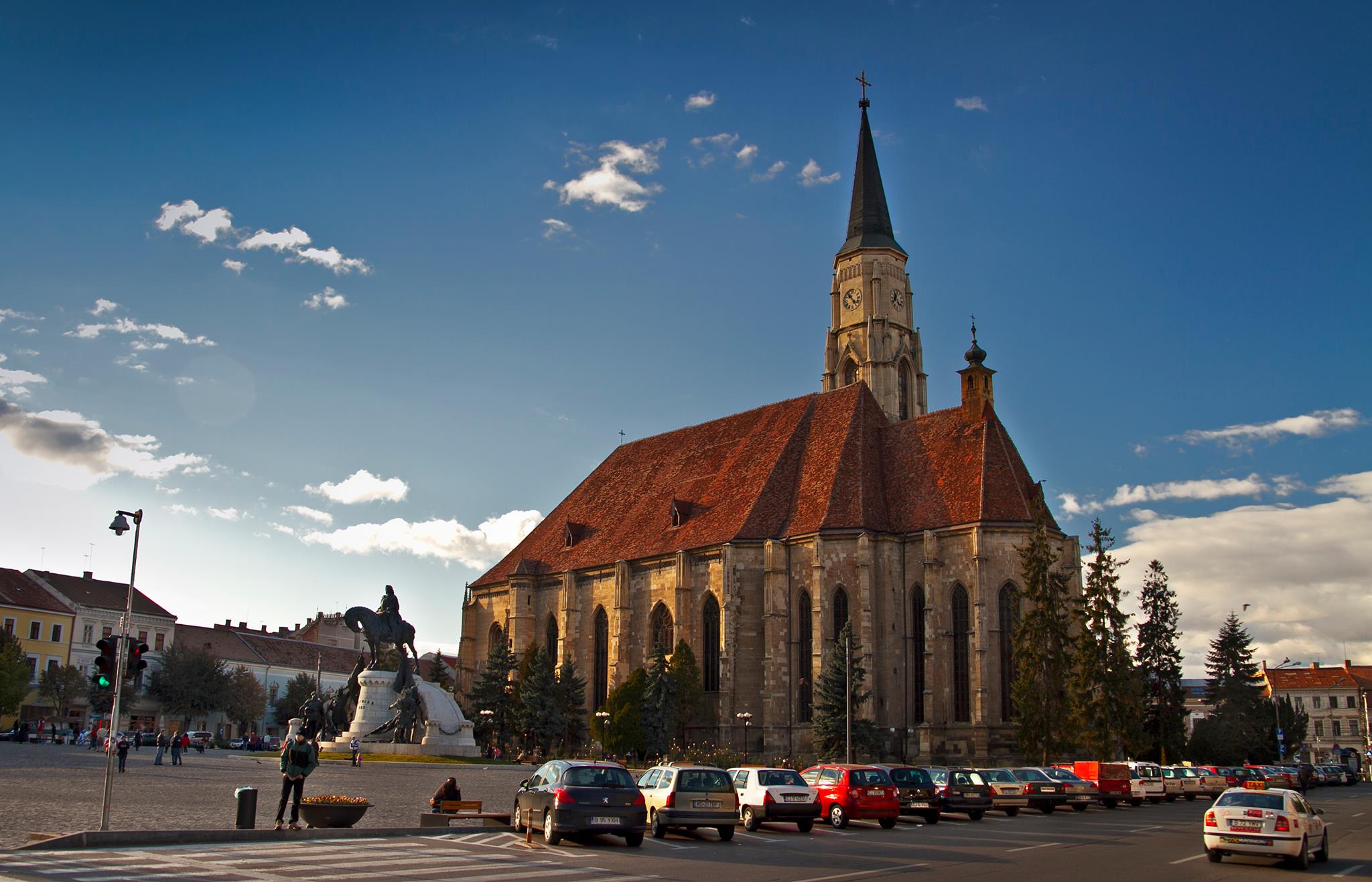
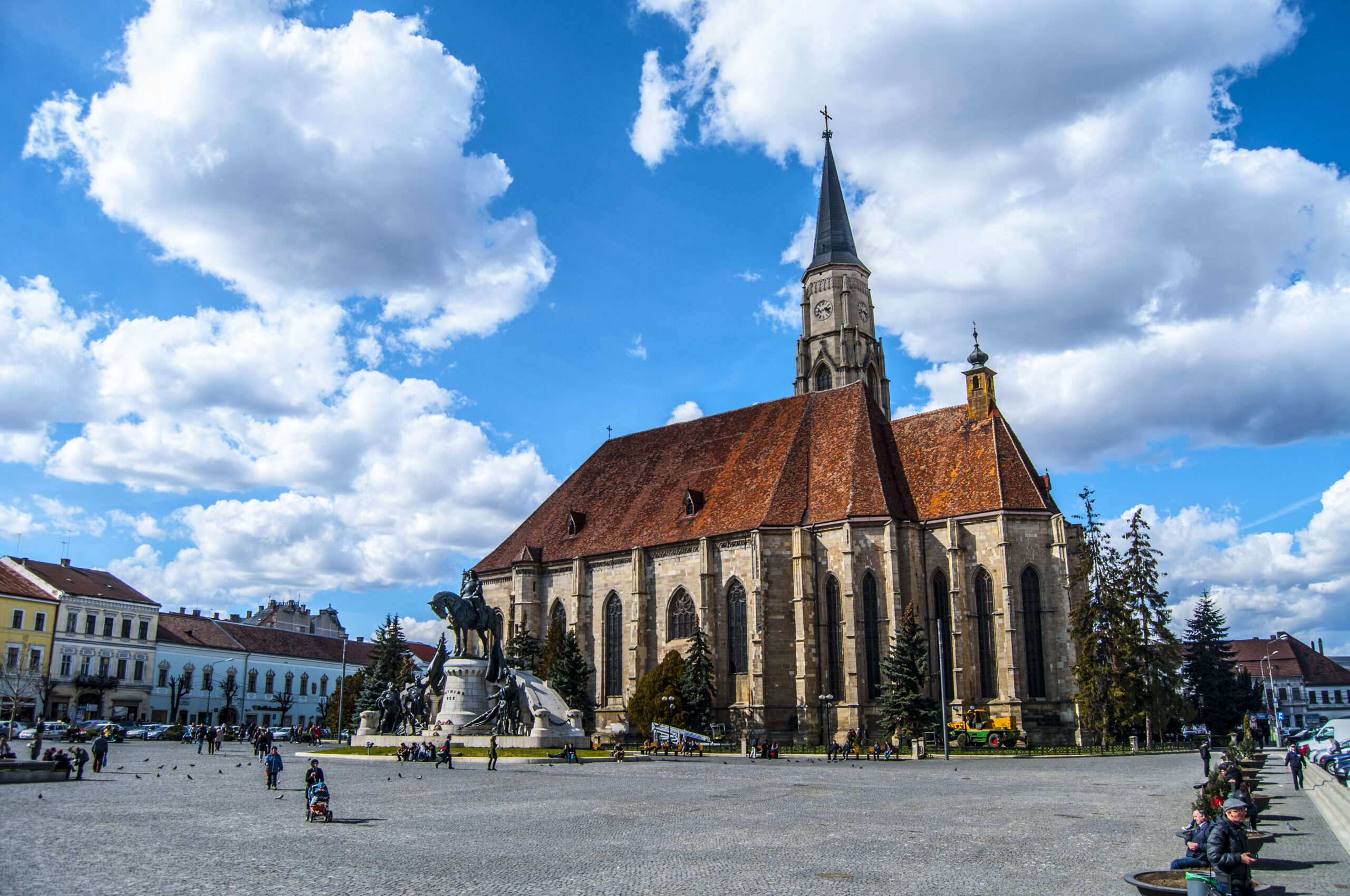
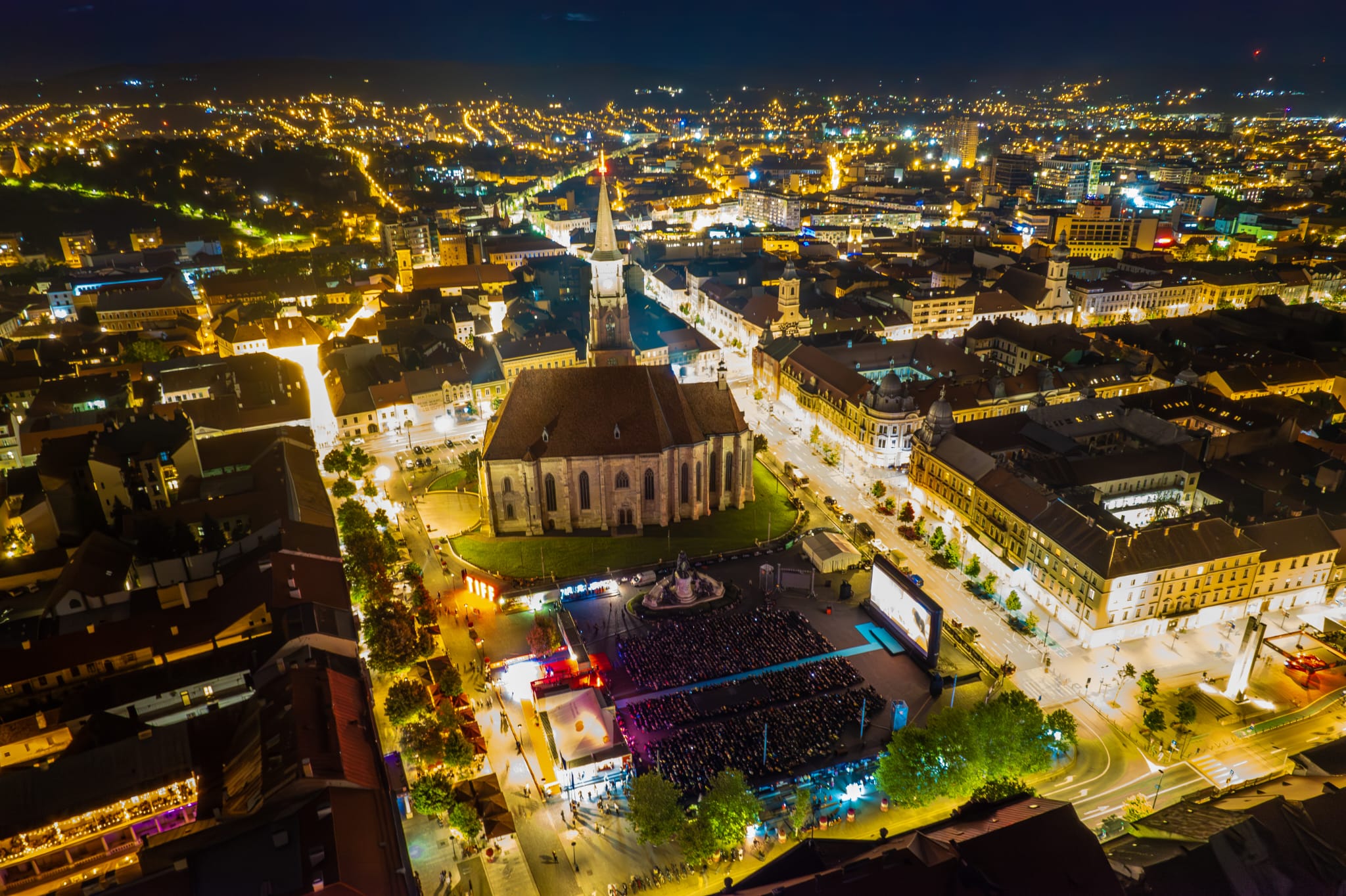
The Orthodox Cathedral serves as the spiritual centre of the city, but the Roman-Catholic Cathedral Saint Michael, is one of the most important Gothic constructions in the country. Construction began in the 14th century and during the Reformation the church became in turn Lutheran, then Calvinist and then for 150 years a Unitarian place of worship, until it was returned back to the Roman-Catholic community following the Counter-reformation. The church spire, initially built in the 16th century, was rebuilt in the Baroque style in 1744 and then demolished as a result of an earthquake. The current clock steeple built in 1837 in the Neo-gothic style is the highest spire in Romania.
Next to the Roman-Catholic church, you will find a fine, equestrian statue of King Matei Corvin with his four generals which was inaugurated in 1902. Matei Corvin, who was born in Cluj, was the King of Hungary from 1458 until 1490 during which time he granted a series of privileges to its native town.
Palaces
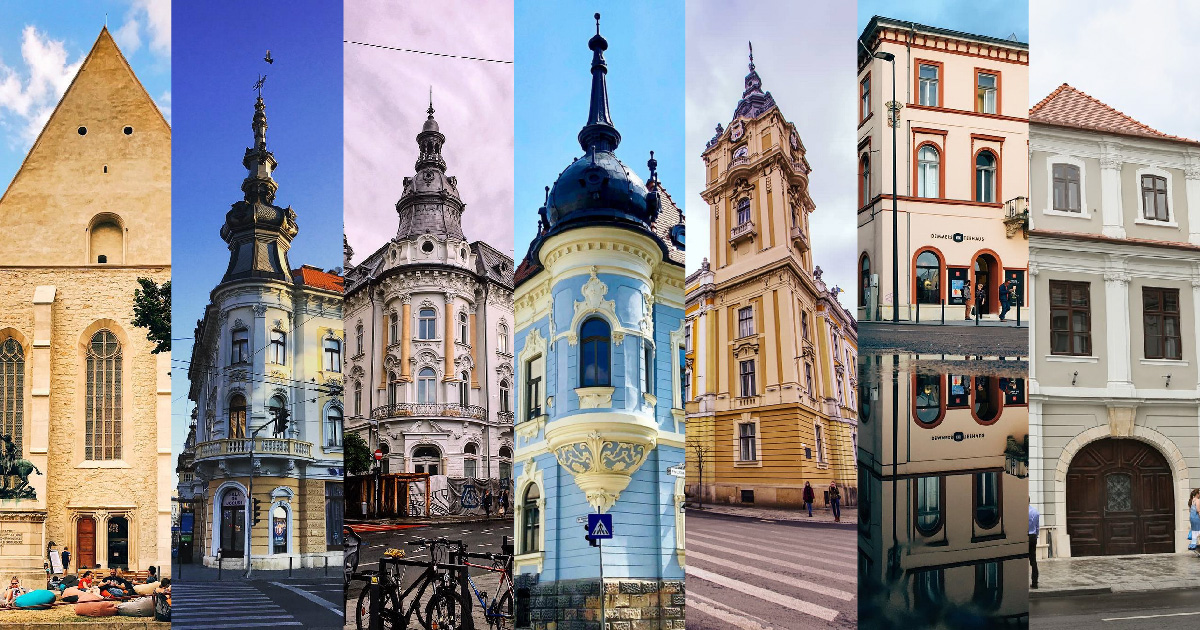
The Western influences turned Cluj into a stylish, and highly cultured city. The unmistakable legacy can be appreciated in its ample courtyards, the Renaissance and early modern basements which today host a number of pubs and restaurants, as well as the splendid Baroque, Neo-classical and Art Nouveau palaces and town houses of Hungarian nobles dotted around the city centre. Of special note is the Banffy Palace, an important building of the 18th century Cluj located in Piaţa Unirii and considered the most representative Baroque building in Transylvania. Currently the palace is home to the Cluj-Napoca Art Museum. Other examples include the eclectic Baboş Palace and Szeky Palace which are located on the bank of the Someş, near Mihai Viteazul Square.
Cluj-Napoca Art Museum: 30, Unirii Square
Opening hours: Wednesday- Sunday: 10:00 -17:00
The electic Baboş Palace and Szeky Palace on the bank of the Someş, near Mihai Viteazul Square
Protestant Churches
Cluj was an important centre of the Reformation during the 17th century, and has to this day several protestant churches. These include the Reformed-Calvin Church in the Lower city, also called the Two Speer Church. Built in the 19th century, it is one of the buildings that symbolises the city.
The Reformed-Calvin Church is located on 21 Decembrie Boulevard at no. 41.
The Unitarian Church was built at the end of the 18th century in the Baroque style.